Have you ever felt like your body just doesn’t have the resilience it should? Like you’re constantly catching colds while everyone around you stays healthy, or you’re exhausted even after a full night’s sleep? In Traditional Chinese Medicine, this isn’t just “bad luck” or “getting older”—it’s what practitioners call having a weak constitution.
But here’s the good news: a weak constitution isn’t a life sentence. It’s more like a warning light on your dashboard, telling you that your body’s foundation needs some attention. Think of it as your baseline energy reserves, digestive strength, and immune resilience all rolled into one. When this foundation is weak, everything else becomes harder—fighting off illness, maintaining energy, even thinking clearly. The beautiful part? With the right lifestyle choices, you can rebuild this foundation brick by brick.

The Seven Tell-Tale Signs Your Constitution Needs Support
Let’s talk about what a weak constitution actually looks like in daily life. These aren’t vague symptoms—they’re specific patterns that Traditional Chinese Medicine has recognized for over 2,000 years.
Sign 1: You’re Tired All the Time
Not just “I could use a coffee” tired, but bone-deep exhaustion. You wake up after eight hours of sleep feeling like you’ve run a marathon. By mid-afternoon, you’re dragging yourself through tasks that used to feel effortless. This persistent fatigue, even with adequate rest, signals that your body’s Qi—its fundamental energy—is running on empty.
Sign 2: Your Digestion is Unpredictable
Bloating after meals, feeling full too quickly, loose stools, or that uncomfortable heaviness in your stomach—these are classic signs of weak spleen function in TCM. You might notice you can’t eat certain foods without consequences, or you lose your appetite easily. Your digestive system is like the engine that powers everything else, and when it’s struggling, your whole body feels it.
Sign 3: You Catch Every Cold That Goes Around
While your coworkers shake off a bug in a day or two, you’re down for a week. Your immune system seems to have taken a permanent vacation. This frequent susceptibility to illness indicates that your body’s protective Qi—what we call Wei Qi—isn’t strong enough to guard your boundaries.
Sign 4: Brain Fog Has Become Your Constant Companion
You walk into a room and forget why. Names slip through your mind like water. Concentrating on tasks feels like wading through mud. This mental cloudiness isn’t just stress—it’s often a sign that your spleen isn’t effectively transforming nutrients into the clear Qi your brain needs to function.
Sign 5: Your Hands and Feet Are Always Cold
Even in a warm room, your extremities feel like ice. You need extra layers when everyone else is comfortable. This sensitivity to cold, along with pale lips and a general aversion to chilly weather, suggests your body lacks the Yang energy needed to warm and circulate.
Sign 6: Your Voice is Soft and You Speak Quietly
This might seem strange, but in TCM, a weak voice often accompanies Qi deficiency. You find yourself speaking softly, running out of breath mid-sentence, or avoiding long conversations because they’re exhausting. Your body simply doesn’t have the energy reserves to project.
Sign 7: Environmental Changes Hit You Hard
Weather shifts, seasonal transitions, temperature changes—they all knock you off balance. While others adapt easily, you’re reaching for tissues, feeling drained, or experiencing mood swings with every atmospheric pressure change.
Understanding the Roots: What Makes a Constitution Weak?
Traditional Chinese Medicine sees the body as an interconnected system where everything influences everything else. At the heart of constitution strength are several key concepts:
Qi: Your Life Force Energy
Think of Qi as the invisible force that powers all your bodily functions—circulation, digestion, thinking, movement. When Qi is abundant, you feel vibrant and resilient. When it’s deficient, everything slows down. Your Qi comes from two sources: what you inherited from your parents (your prenatal Qi) and what you generate daily through food, air, and rest (your postnatal Qi).
The Spleen: Your Digestion Command Center
In TCM, the spleen isn’t just an organ—it’s the system responsible for transforming food into usable energy and blood. When your spleen function is weak, even nutritious food can’t nourish you properly. You might eat well but still feel depleted because your body can’t extract and distribute the nutrients effectively. The spleen also manages moisture in your body, which is why spleen weakness often shows up as bloating, water retention, or that feeling of heaviness.
Yin-Yang Balance: The Dynamic Duo
Your body constantly balances warming Yang energy with cooling, nourishing Yin. Yang keeps you warm, active, and energized. Yin provides substance, moisture, and calm. A weak constitution often involves deficiency in one or both, throwing this delicate balance off kilter. Too little Yang means constant coldness and fatigue. Too little Yin means feeling dried out, restless, and overheated despite having no energy.
The Emotional Connection
Here’s something Western medicine is just beginning to appreciate: your emotions directly impact your physical constitution. Chronic stress depletes Qi. Worry damages the spleen, literally weakening your digestion. Unresolved grief affects the lungs, compromising your protective energy. This isn’t metaphorical—TCM has observed these patterns for centuries, and modern research is confirming what practitioners have always known: you can’t separate emotional wellbeing from physical health.
Rebuilding Your Foundation: The Food Factor
If your constitution is weak, your plate is your most powerful tool for change. But it’s not just about what you eat—it’s about how you eat and how your body can actually use what you’re giving it.
Prioritize Warm, Cooked Foods
Your spleen loves warmth. Raw, cold foods require tremendous energy to process, and if your constitution is already weak, you simply don’t have that energy to spare. This doesn’t mean everything needs to be piping hot, but think room temperature or above.
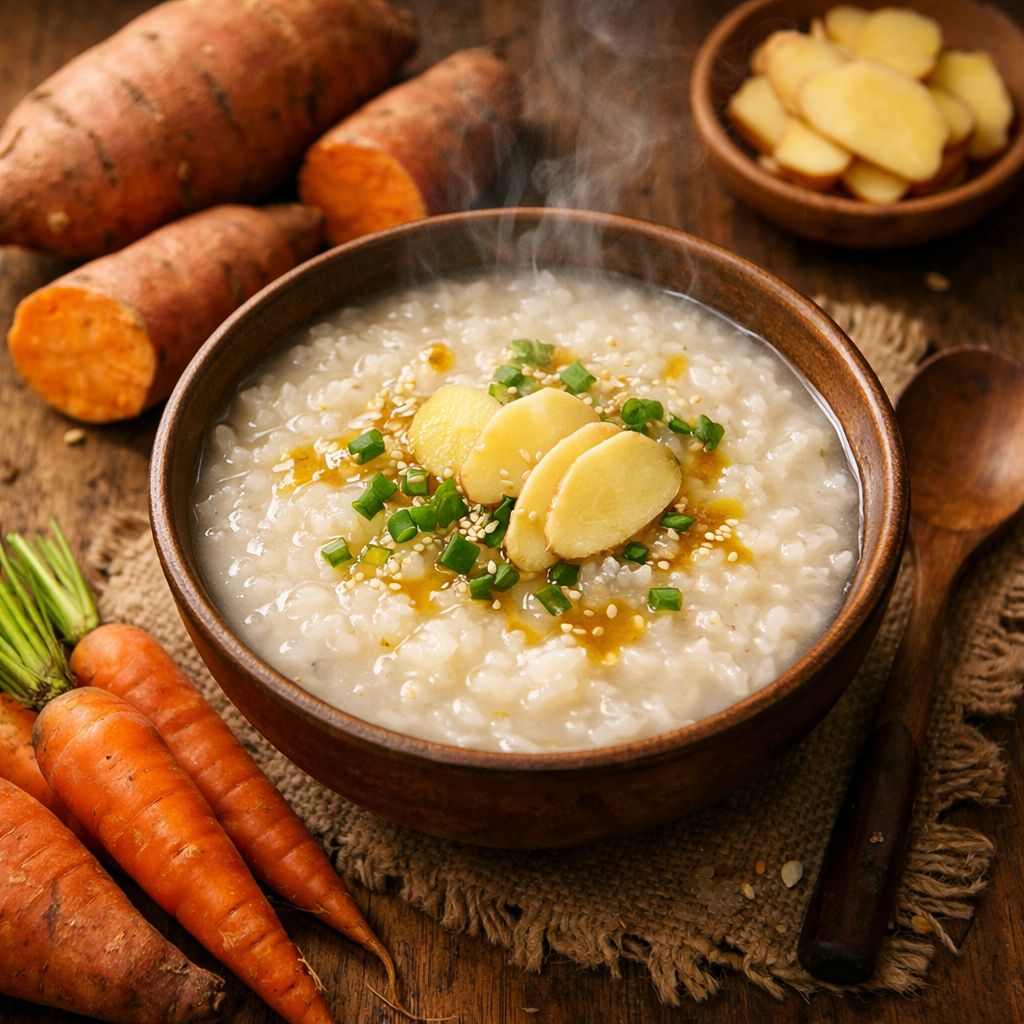
Start your day with warm congee (rice porridge) made with ginger and a protein source. For lunch and dinner, focus on soups, stews, and gently cooked vegetables. Root vegetables like sweet potatoes, carrots, squash, and pumpkin are particularly nourishing because they’re naturally sweet—and in TCM, the sweet flavor strengthens the spleen.
Eat on a Regular Schedule
Your body thrives on rhythm. Eating at consistent times trains your digestive system to be ready for the work of transformation. Skipping meals or eating erratically depletes your spleen Qi over time.
Choose Qi-Building Foods
Certain foods are known for their ability to tonify Qi and strengthen the spleen:
- Grains: Brown rice, millet, quinoa, and oats (especially as porridge)
- Proteins: Chicken, eggs, lean beef, and fatty fish like salmon
- Vegetables: Cooked greens, mushrooms, beans, and squash
- Natural Sweeteners: Small amounts of honey or dates
- Warming Spices: Ginger, cinnamon, cardamom, and fennel
What to Minimize
When your constitution is weak, certain foods make the situation worse. Limit cold/raw foods, excessive dairy (which creates dampness), refined sugars, iced drinks, and greasy or deep-fried items. These all burden your spleen and slow down the Qi-building process.
Movement and Daily Rhythms That Restore
Exercise is crucial, but the type matters immensely when your constitution is weak. High-intensity workouts that leave you depleted aren’t helping—you need movement that builds rather than drains.
Gentle, Flowing Practices
Tai chi and qi gong are specifically designed to cultivate and circulate Qi without exhausting you. These ancient practices involve slow, flowing movements coordinated with breathing, and they’re remarkably effective at rebuilding energy reserves. Even 10-15 minutes daily can make a noticeable difference.
Walking in nature is another excellent choice. The gentle, rhythmic movement supports circulation without overtaxing your system. Plus, connecting with natural environments has its own restorative effect.
The Power of Rest
Here’s something our always-on culture doesn’t want to hear: rest isn’t lazy—it’s essential medicine for a weak constitution. Your body repairs and rebuilds during rest, particularly during sleep.
Aim for a consistent sleep schedule, going to bed by 10 or 11 PM when possible. In TCM theory, the hours between 11 PM and 3 AM are when your body does its deepest restoration work. Chronic late nights literally prevent your constitution from strengthening.
Also build in short rest periods during the day. This doesn’t mean napping (which can disrupt night sleep), but simply sitting quietly, closing your eyes, or practicing gentle breathing for 5-10 minutes.
Understanding Your Unique Constitutional Pattern
Traditional Chinese Medicine doesn’t believe in one-size-fits-all solutions. The five-element framework—Wood, Fire, Earth, Metal, and Water—provides a sophisticated way to understand different constitutional patterns.
Someone with an Earth constitution (related to the spleen and stomach) might struggle primarily with digestion and overthinking. A Metal constitution person might have weak lungs and grief-related issues. Water types often have lower back weakness and fear patterns.
Understanding your constitutional type helps you personalize your approach. A Wood-type person with Liver Qi stagnation needs more movement and stress release, while an Earth-type person with spleen deficiency needs more warming foods and digestive support.
This is where platforms like HerbalsZen’s EastChi AI become valuable—they can help identify your specific constitution and provide tailored recommendations based on 2,000 years of wisdom, enhanced by modern technology’s ability to process complex patterns.
When to Seek Professional Guidance
While lifestyle changes can work wonders, sometimes you need expert support. Consider consulting a qualified TCM practitioner if:
- Your fatigue persists despite rest and dietary changes
- You’re experiencing significant pain or severe symptoms
- You have complex health conditions or take multiple medications
- You want a comprehensive constitutional assessment
- You’re interested in herbal support tailored to your specific pattern
A skilled practitioner can create a personalized plan addressing your unique imbalances through diet, lifestyle, acupuncture, and herbal formulas. They can also help you navigate the interaction between Eastern and Western medical approaches.
Your Action Plan: Starting Today
Rebuilding a weak constitution isn’t about dramatic overnight changes—it’s about consistent, gentle support that accumulates over time. Here’s where to begin:
This Week: Start eating warm, cooked breakfasts. Replace cold cereal or smoothies with congee, oatmeal, or scrambled eggs. Notice how you feel.
This Month: Establish a regular eating schedule and add 10 minutes of gentle movement daily—whether that’s tai chi, qi gong, or simply walking.
Ongoing: Pay attention to stress and practice simple techniques like deep breathing when you notice tension building. Remember that worry literally weakens your digestive function.
Always: Treat your body as the integrated, intelligent system it is. When you address one area—diet, sleep, movement, or emotional wellbeing—you’re supporting the whole.
This holistic perspective aligns perfectly with HerbalsZen’s philosophy: that ancient Eastern wisdom, when combined with modern technology and personalized approaches, can help each person unlock their body’s innate healing potential. Your constitution is your foundation, and with patient, consistent care, that foundation can become strong, resilient, and capable of supporting vibrant health for years to come.
The journey from weak constitution to robust vitality isn’t always quick, but it’s entirely possible. Start where you are, with what you have, and trust that small, consistent actions compound into remarkable transformation.