Digestive health sits at the core of overall wellness, a truth understood by ancient healers and increasingly validated by modern science. As more people seek natural alternatives to pharmaceutical interventions, herbal remedies for digestion have surged in popularity. Yet amid countless wellness claims and traditional practices, a crucial question emerges: what actually works?
The beauty of our current moment lies in the convergence of ancient wisdom and rigorous scientific inquiry. Researchers are now applying the gold standard of medical evidence—randomized controlled trials—to herbs used for millennia in traditional medicine systems. This intersection reveals that many herbal remedies for digestion aren’t merely folklore; they’re effective therapeutic tools backed by measurable outcomes. At HerbalsZen, we believe this fusion of 2,000 years of Eastern medicine wisdom with modern evidence creates the foundation for truly personalized, effective wellness approaches.
Peppermint Oil: A Powerful Ally for IBS
Among herbal remedies for digestion, peppermint oil stands as one of the most thoroughly researched. Multiple randomized trials have demonstrated its effectiveness, particularly for irritable bowel syndrome (IBS). The active compound menthol works as an antispasmodic, relaxing the smooth muscles of the intestinal tract and reducing painful cramping.
In a significant study by Cappello and colleagues, 57 IBS patients received either peppermint oil or placebo for four weeks. The results were compelling—participants taking peppermint oil experienced a 40% decrease in total IBS symptom scores compared to 24.3% in the placebo group. These improvements weren’t marginal; they were clinically meaningful reductions in abdominal pain, bloating, and discomfort that genuinely improved quality of life.
The mechanism is straightforward yet elegant. Peppermint oil blocks calcium channels in intestinal smooth muscle, preventing excessive contractions that cause cramping and urgency. This natural muscle relaxation explains why so many IBS patients, particularly those with the diarrhea-predominant type (IBS-D), find relief with enteric-coated peppermint oil capsules.
However, effectiveness requires wisdom in application. Peppermint oil isn’t universally appropriate. People with gastroesophageal reflux disease (GERD) may find that peppermint relaxes the lower esophageal sphincter, potentially worsening acid reflux. Those with gallbladder disease should exercise caution, as peppermint can stimulate bile flow. This highlights a core principle at HerbalsZen: personalization matters. What works brilliantly for one body constitution may be unsuitable for another.
Ginger: Nature’s Answer to Nausea
Ginger has earned its reputation as one of the most effective herbal remedies for digestion, particularly for nausea. Clinical trials have extensively validated ginger’s antiemetic properties, with especially strong evidence for pregnancy-related nausea and vomiting.
A systematic review examining ginger’s use during pregnancy found that doses of 1-3 grams daily significantly alleviated nausea symptoms. Remarkably, several studies showed ginger performed comparably to vitamin B6, a standard pharmaceutical recommendation for morning sickness. In one randomized controlled trial, pregnant women taking 500mg of ginger daily experienced substantial reductions in both the severity and frequency of nausea episodes.
The active compounds in ginger—gingerols and shogaols—work through multiple pathways. They block certain serotonin receptors involved in triggering nausea, similar to how some prescription antiemetics function. Additionally, ginger appears to accelerate gastric emptying, reducing the sensation of fullness and associated queasiness.
Ginger’s versatility makes it accessible. Fresh ginger tea, crystallized ginger, or standardized capsules all offer therapeutic benefits. However, professional guidance remains essential, especially during pregnancy or for those taking anticoagulant medications, as ginger can affect blood clotting. The principle of “food as medicine” doesn’t mean “medicine without guidance”—a distinction we emphasize at HerbalsZen when helping individuals integrate herbal remedies for digestion into their wellness routines.
Artichoke Leaf Extract: Relief for Dyspepsia
Functional dyspepsia—persistent upper abdominal discomfort without clear structural cause—affects millions. Artichoke leaf extract has emerged as a promising herbal remedy for digestion, specifically targeting these uncomfortable symptoms.
The mechanism centers on bile secretion and gastrointestinal motility. Artichoke leaf extract contains cynarin and other compounds that stimulate bile production, enhancing fat digestion and reducing that heavy, uncomfortable feeling after meals. Improved bile flow also supports overall digestive efficiency, addressing root causes rather than merely masking symptoms.
Placebo-controlled trials have demonstrated impressive results. Participants with dyspepsia taking artichoke leaf extract reported significant improvements in bloating, nausea, abdominal pain, and overall discomfort. One study found that 60% of patients experienced meaningful symptom reduction within six weeks, compared to 35% in the placebo group.
The holistic nature of artichoke’s benefits aligns with Eastern medicine’s understanding of interconnected body systems. Rather than targeting a single symptom, artichoke leaf extract enhances digestive function broadly, supporting the body’s natural processes. This represents the kind of multi-targeted therapeutic approach that ancient healers intuitively understood and modern science now validates.
Important caveats apply. Individuals with gallbladder disease or bile duct obstruction should avoid artichoke leaf extract, as increased bile flow could exacerbate their condition. This again underscores why personalized wellness guidance—considering individual health history and constitution—proves essential for safe, effective herbal remedy use.
Fennel: Traditional Wisdom for Bloating and Gas
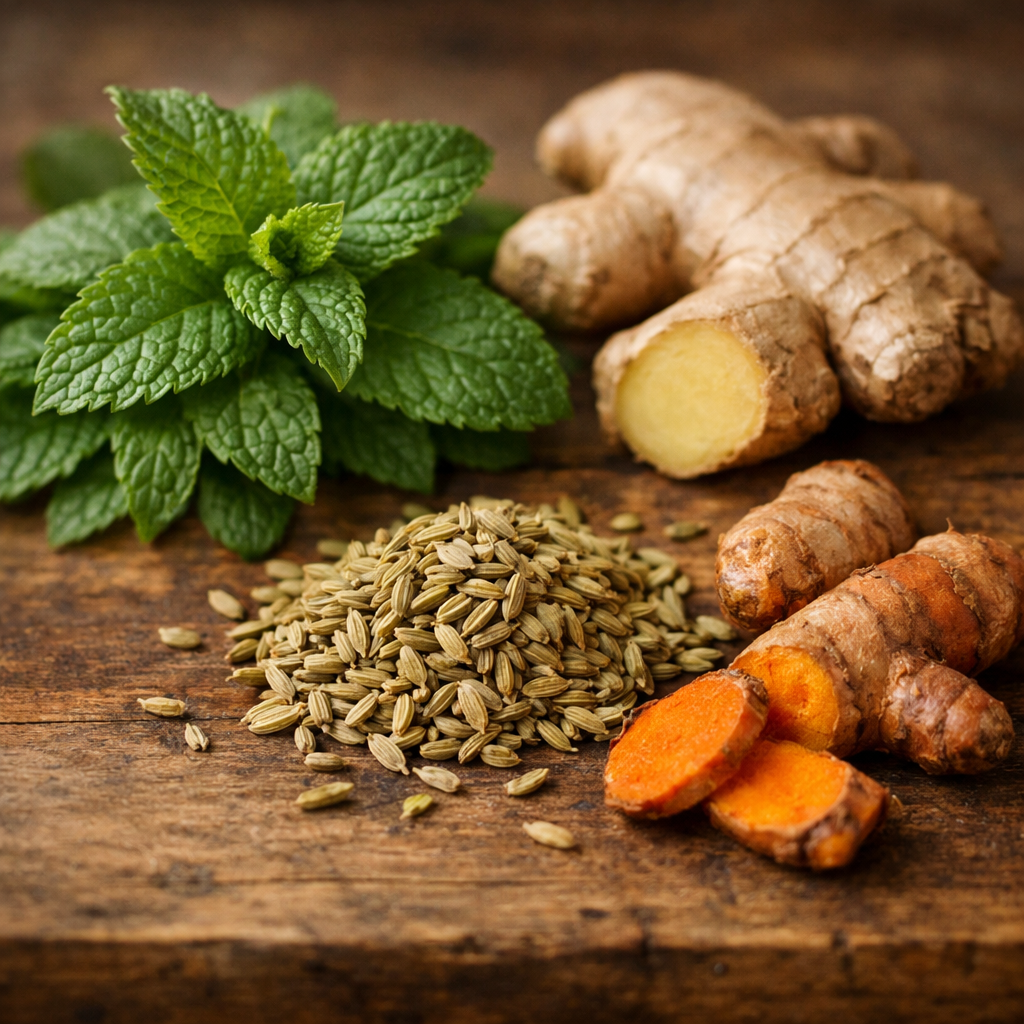
Fennel has served as a digestive aid across cultures for centuries. Modern research confirms what traditional healers knew: fennel effectively alleviates bloating and intestinal gas by relaxing intestinal smooth muscle and facilitating gas passage.
Clinical evidence supports fennel’s antispasmodic properties. The essential oils in fennel seeds, particularly anethole, reduce muscle spasms in the digestive tract while promoting gastric motility. This dual action helps food move smoothly through the system while preventing the painful gas buildup that causes distension and discomfort.
Practical applications are wonderfully simple. Fennel tea, made by steeping crushed fennel seeds in hot water, provides gentle relief after meals. Fennel oil capsules offer more concentrated doses for persistent symptoms. Many people find that incorporating fennel into cooking—particularly with beans and cruciferous vegetables known for causing gas—prevents digestive discomfort before it begins.
The traditional Eastern practice of drinking fennel tea after meals reflects deep understanding of digestive timing and support. At HerbalsZen, we recognize how these traditional practices, when personalized to individual constitutions and combined with modern insights, create powerful wellness strategies.
However, those with allergies to carrots, celery, or mugwort should approach fennel cautiously due to potential cross-reactivity. People with hormone-sensitive conditions may also want to limit fennel consumption, as it contains phytoestrogens. These nuances demonstrate why blanket recommendations fall short—true wellness requires personalization.
Turmeric and Curcumin: Anti-Inflammatory Digestive Support
Turmeric, particularly its active compound curcumin, has captured scientific attention for its remarkable anti-inflammatory properties. While research on turmeric as a digestive remedy continues to evolve, emerging evidence suggests significant potential for IBS, dyspepsia, and other functional gastrointestinal disorders.
Curcumin’s mechanisms are impressively multifaceted. It reduces inflammatory signaling in intestinal tissues, potentially alleviating the chronic low-grade inflammation that contributes to IBS symptoms. Preliminary research also indicates that curcumin may modulate gut microbiota composition, promoting beneficial bacteria while reducing harmful strains.
Several trials have explored turmeric for IBS management. While results vary and larger studies are needed, many participants report reduced abdominal pain and improved bowel patterns. Curcumin appears particularly helpful for inflammation-related digestive symptoms, working at the cellular level to calm overactive immune responses in the gut.
The challenge with curcumin lies in bioavailability—the body doesn’t easily absorb it. Traditional preparations paired turmeric with black pepper, whose piperine content enhances curcumin absorption by up to 2,000%. This represents ancient nutritional wisdom that modern science has now quantified and validated.
At HerbalsZen, we appreciate how turmeric exemplifies the importance of preparation methods and combinations in herbal medicine. It’s not enough to simply consume an herb; understanding how to prepare and combine it for optimal effectiveness reflects the depth of traditional knowledge systems.
Probiotics: Modulating the Gut Microbiome
While not herbs in the traditional sense, probiotics deserve mention in any discussion of natural digestive remedies. These beneficial bacteria have demonstrated effectiveness in managing IBS and various functional gut symptoms by modulating the gut microbiota.
The evidence is substantial and growing. Meta-analyses of randomized trials show that specific probiotic strains can reduce IBS symptom severity, particularly bloating, abdominal pain, and abnormal bowel patterns. However, not all probiotics work equally—strain-specific benefits mean that a Lactobacillus rhamnosus strain might help one person while a Bifidobacterium combination serves another better.
This strain specificity reflects a deeper truth about digestive wellness: individual gut microbiome composition varies dramatically from person to person. What balances one person’s microbiome may not address another’s needs. Eastern medicine has long recognized this through concepts of individual constitution and personalized dietary guidance.
The emerging field of microbiome science validates ancient wisdom about bio-individuality. At HerbalsZen, our EastChi AI technology considers these individual variations, recognizing that optimal gut health requires understanding each person’s unique microbial ecosystem, dietary patterns, stress responses, and constitutional tendencies.
Integrating Herbal Remedies Into Holistic Wellness
The scientific validation of herbal remedies for digestion offers tremendous opportunity, but effectiveness depends on thoughtful integration. Several principles guide safe, effective use:
Professional Medical Guidance Remains Essential
Herbal remedies interact with medications, affect underlying conditions, and may not suit everyone. Before starting any herbal protocol, consult with qualified healthcare providers who understand both conventional medicine and herbal therapeutics. This ensures safety and addresses potential contraindications.
Personalization Based on Individual Constitution
Eastern medicine teaches that digestive symptoms reflect underlying imbalances in the body’s systems. Someone experiencing bloating due to “cold” constitution requires different support than someone with “heat” patterns. At HerbalsZen, we merge this constitutional wisdom with modern nutritional science, using AI technology to deliver truly personalized recommendations.
Quality and Preparation Matter
Not all herbal products are created equal. Standardized extracts ensure consistent active compound levels. Enteric-coating protects compounds through stomach acid. Traditional preparation methods—like combining turmeric with black pepper—enhance effectiveness. Quality sourcing and proper preparation transform herbs from marginal to meaningful therapeutic tools.
Patience and Consistency Yield Results
Unlike pharmaceutical drugs that work immediately, herbal remedies often require consistent use over weeks to demonstrate full benefits. This reflects their gentle, supportive nature—they enhance the body’s own healing capacity rather than forcing immediate change.
Address Root Causes, Not Just Symptoms
The most powerful aspect of herbal digestive remedies is their ability to support underlying function rather than merely suppressing symptoms. Artichoke improves bile flow. Fennel enhances motility. Ginger supports gastric emptying. This functional support addresses why symptoms occur, not just what symptoms manifest.
Embracing the Fusion of Ancient and Modern
The scientific validation of herbal remedies for digestion represents more than simply confirming old practices. It demonstrates how ancient wisdom and modern innovation can unite to create more effective, personalized wellness approaches.
Traditional Chinese medicine understood that digestion reflects the entire body’s balance—emotional state, lifestyle patterns, constitutional tendencies, and environmental factors all interconnect. Modern science now confirms these relationships through research on the gut-brain axis, microbiome influences on mood, and how stress affects digestive function.
At HerbalsZen, we believe the future of wellness lies in this integration. Our EastChi AI technology analyzes individual body constitutions through the lens of Five Elements theory and Yin-Yang balance, then delivers personalized nutrition and herbal guidance backed by both traditional knowledge and contemporary research. This represents the perfect fusion: 2,000 years of wisdom enhanced by modern technology’s precision and accessibility.
Digestive health isn’t isolated—it reflects and influences your entire wellbeing. By approaching it holistically, with evidence-based herbal remedies tailored to your unique constitution, you can restore natural balance and unlock your body’s innate healing potential. The herbs are ancient, the science is modern, and the results—when done thoughtfully—are transformative.